The Saint Ann Difference
Boldly Catholic
At St. Ann Catholic School, our faith is not just a class added to an otherwise secular curriculum. It is at the heart of everything we do. Everything we do is ordered toward worship. Our teachers are trained to help students to recognize how God shows up in every subject and in every aspect of creation. Our students and teachers attend Mass three times per week and sing Gregorian Chant at the end of every Mass.
Classical Education
Classical Education is defined by Classical Commons as “the pursuit of wisdom and virtue by means of a rich and ordered course of study grounded in the liberal arts tradition.”
Wisdom and Virtue - In classical education, we pursue wisdom and virtue first and foremost, rather than simply getting a job or some other utilitarian end. Being prepared for the workplace is important, and that will happen through a classical education. However, we set the bar higher in order to form students who are not just able to get a job, but able to live virtuously in their families and in their careers.
Rich and ordered course of study - The curriculum is intentional and integrated. Through our ordered curriculum, students study the same time frame in different subjects, providing order and integration to the curriculum where other schools provide fragmentation. This integration of curriculum allows students to see meaningful connections between all of their subjects. It also allows students to see the truth, goodness, and beauty as well as order in God’s creation.
Liberal arts tradition - The study of the liberal arts is an essential part of a formation in virtue. While some schools focus on STEM for utilitarian purposes, classical education holds to the belief that the liberal arts are essential to the formation of engineers, mathematicians, and computer programmers. We value STEM and pursue it through a rigorous math and science curriculum without sacrificing the humanities.
Distraction Free by Design
While many schools have opted for one-to-one device policies, personal devices are not used at St. Ann. Cell phones, if students have them, are turned in to the office at the beginning of the day. Laptops are only used for standardized testing a few times a year. Getting rid of these devices creates room for cultivating the attentiveness proper to both learning and prayer. We see the fruits of this everyday as students are more and more capable of recognizing the beauty of creation, focusing on math problems, and spending time in prayer.
In the spirit of Pope Leo XIV’s 2026 encyclical Magnifica Humanitas, we prioritize formation in all things human over technological progress. While we want our students to be informed and capable citizens of a digital world, we believe that elementary school is a time for mastering grammar and language skills. Every skill we outsource to artificial intelligence is a skill students are not learning.
“Educating people about the use of AI, then, involves teaching them to decide when and for what purpose it ought not to be used. The speed and ease with which answers or summaries can be obtained risk extinguishing the desire to ask questions, which is a process that bears fruit only over time. As Plato wrote, the deepest and most important things are learned only after much time and effort, by engaging in discussion with others, “striking upon” ideas and experiences together like flint until the spark of understanding is kindled within us. [147] We must learn, then, how to exercise restraint in the use of AI and to protect our young people from the promise of the perfect machine, from that subtle temptation which renders human thought seemingly superfluous precisely when it is most needed.” -Pope Leo XIV, Magnifica Humanitas 140
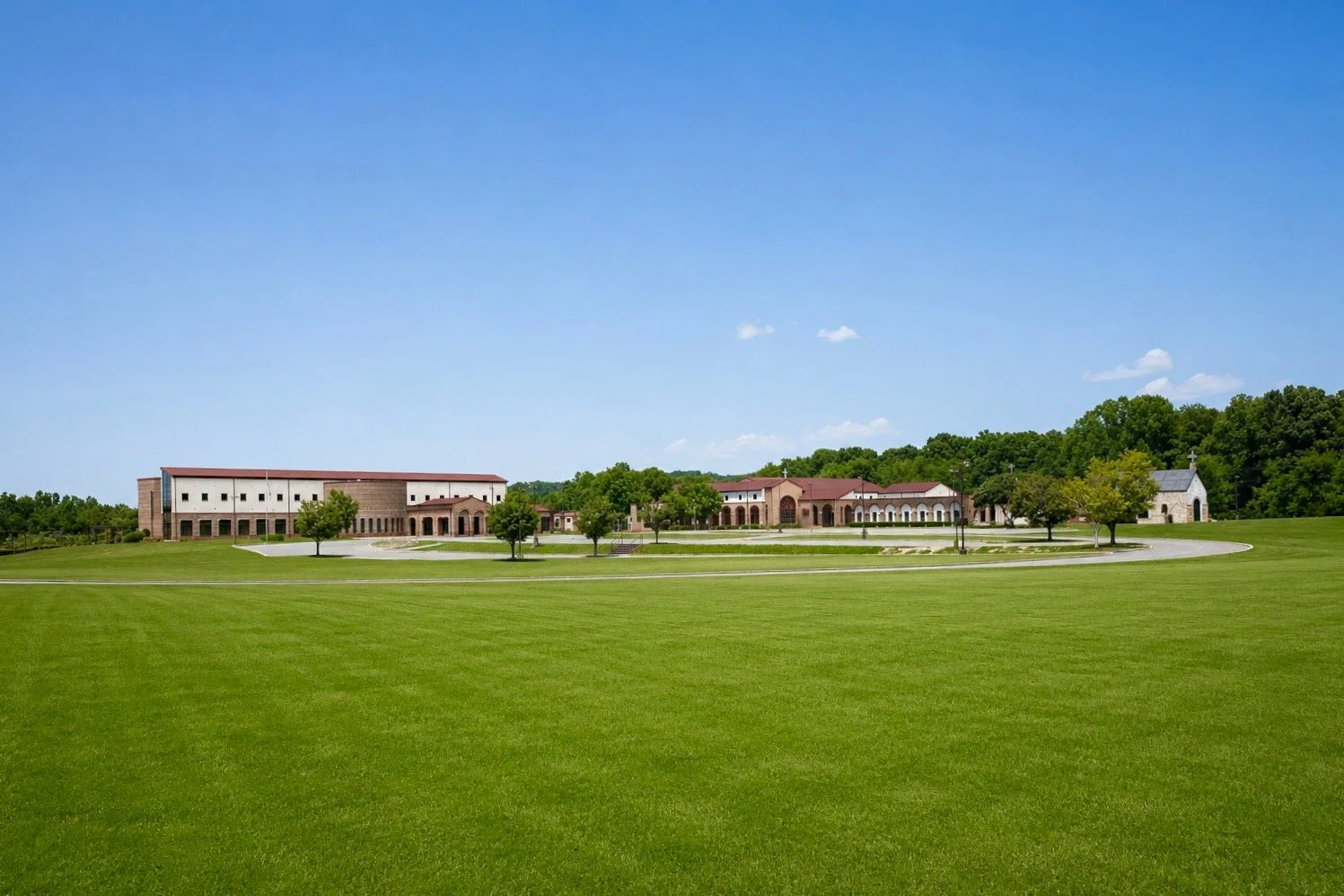
If the “Saint Ann Difference” strikes a chord with you, give us a call! We’d love to give you a tour of our beautiful 13-acre school campus!